Wednesday, May 18, 2016

Hay Day Cheats

How to get money VERY quickly

To get money extremely quickly in Hay Day, first go hunting through your newspaper and other people's newspapers for construction equipment and saws, dynamite, and other goods selling in build (i.e. 5 for 400 or something). Buy them all. Then, turn around and sell them individually for between 180 and 220 coins a piece, and put an advertisement on the very last one you list, so that when people go to the store, they will see all of them.
Fast XP

Want to get fast XP? If you are level 15 or up and you have apple trees, make sure you pick the apples as you will get 7 XP per apple. Try and find apple advertisements in the paper, then visit the people that have apple advertisements, then search their farm for shaking trees with exclamation marks on a sign. Click on the sign and you get an XP reward. Complete orders on the order board. Visit other people's farm and look at their dock; if it has a crate with an exclamation mark, click it and take a look at the supplies you need to get an XP reward.
Animals
You can buy the cats and dogs with vouchers and you gain vouchers from completing boat and truck orders or harvesting crops and treasure box. You can not trade them. When you have enough vouchers you can buy your cat or dog, but before you do this you must buy a cat or dog house. Your cats and dogs will need feeding, milk for cats and bacon for dogs. Every time you feed your pet you will get 30 xp. They only feed every few hours. Apart from the xp they are mainly a decorative purpose for your farm; for some players, this will be a personal achievement getting each individual pet.

Earn Diamonds
Open your mine and use TNT. It will produce diamonds every couple of blasts. When you have enough diamonds, pay for Tom's service and have him find nothing but TNT and load up on it. Then blow the mine and use as much metal as you can; again, more diamonds will come every couple of blasts. Sell what metal you can't store. But you have to use Tom and get a bunch of TNT.

Please leave a comment if you like this post ...

Tuesday, May 17, 2016

Hay Day v1.28.146 Mod Android Apk Download

Hay Day v1.28.146 Hack (Unlimited Everything) Mod Android .apk Download

Hay Day is a freemium mobile farming game developed and published by Mounir the Great from Supercell. Hay Day was released for iOS on June 21, 2012 and Android on November 20, 2013.

Hay is an extremely enjoyable farm building game. The players will have to plant different vegetables and stuff in their field, and harvest them. We simply use our fingertip, sliding across the screen to play the game. With a similar procedure we can interact with the farm animals, each with its own personality; or fish in the lake. As in most social games, on Hay Day also it is possible to trade with our friends from Facebook and other social networks. We can exchange different stuff, make changes, and ultimately negotiate almost any thing of the game. Another strong point of Hay Day is the great level of detail and customization options given in our farm. Hay Day is a fun and beautiful social game that offers new playable aspect. Click here to download.


Welcome to Hay Day, the most popular farming game on mobiles and tablets, number one in 122 countries. Learn the lay of the land, tend to your crops, and trade goods with neighbors and friends. It’s a real special place where the crops never die even though it never rains. Sharing the farm with our quirky animals only makes things more fun!

PLEASE NOTE! Hay Day is free to download and install. However, some game items can also be purchased for real money. If you do not want to use this feature, please set up password protection for purchases in the settings of your Google Play Store app. A network connection is also required.
♥ Grow and customize your farm.
♥ Trade crops and fresh goods with neighbors and friends through your very own roadside shop.
♥ Fulfill orders with your truck and even by steamboat.
♥ Repair your dock and cast your lure to fish the waters.
♥ Build your own town and welcome visitors.

DOWNLOAD FILE


Introduction to JavaScript

JavaScript

Introduction

JavaScript is a compact, object-based scripting language for developing client internet applications.

JavaScript was designed to add interactivity to HTML pages.

JavaScript is a scripting language - a scripting language is a lightweight programming language.

A JavaScript is lines of executable computer code.

A JavaScript is usually embedded directly in HTML pages.

JavaScript is an interpreted language (means that scripts execute without preliminary compilation).

Everyone can use JavaScript without purchasing a license.

All major browsers like Netscape and Internet Explorer support JavaScript .

JavaScript was developed by Netscape as Live Script - changed to JavaScript when endorsed by Sun in 1993, version 1.0 released with Netscape 2.0.

JavaScript is a powerful scripting language that is also capable of performing extensive  form data collecting and form processing functions.

Saturday, May 14, 2016

The Software Process Model & Incremental Development Model

Incremental development is based on the idea of developing an initial implementation, exposing this to user comment and evolving it through several versions until an adequate system has been developed. Specification, development, and validation activities are interleaved rather than separate, with rapid feedback across activities.


Incremental software development, which is a fundamental part of agile approaches, is better than a waterfall approach for most business, e-commerce, and personal systems. Incremental development reflects the way that we solve problems. We rarely work out a complete problem solution in advance but move toward a solution in a series of steps, backtracking when we realize that we have made a
mistake. By developing the software incrementally, it is cheaper and easier to make changes in the software as it is being developed.

Each increment or version of the system incorporates some of the functionality that is needed by the customer. Generally, the early increments of the system include the most important or most urgently required functionality. This means that the customer can evaluate the system at a relatively early stage in the development to see if it delivers what is required. If not, then only the current increment has to be changed and, possibly, new functionality defined for later increments.

Incremental development has three important benefits, compared to the waterfall model:

1. The cost of accommodating changing customer requirements is reduced. The amount of analysis and documentation that has to be redone is much less than is required with the waterfall model.

2. It is easier to get customer feedback on the development work that has been done. Customers can comment on demonstrations of the software and see how much has been implemented. Customers find it difficult to judge progress from software design documents.

3. More rapid delivery and deployment of useful software to the customer is possible, even if all of the functionality has not been included. Customers are able to use and gain value from the software earlier than is possible with a waterfall process.

Incremental development in some form is now the most common approach for the development of application systems. This approach can be either plan-driven, agile, or, more usually, a mixture of these approaches. In a plan-driven approach, the system increments are identified in advance; if an agile approach is adopted, the early increments are identified but the development of later increments depends on progress and customer priorities.

From a management perspective, the incremental approach has two problems:

1. The process is not visible. Managers need regular deliverables to measure progress. If systems are developed quickly, it is not cost-effective to produce documents that reflect every version of the system.

2. System structure tends to degrade as new increments are added. Unless time and money is spent on refactoring to improve the software, regular change tends to corrupt its structure. Incorporating further software changes becomes increasingly difficult and costly.

The problems of incremental development become particularly acute for large, complex, long-lifetime systems, where different teams develop different parts of the system. Large systems need a stable framework or architecture and the responsibilities of the different teams working on parts of the system need to be clearly defined with respect to that architecture. This has to be planned in advance rather than developed incrementally.

You can develop a system incrementally and expose it to customers for comment, without actually delivering it and deploying it in the customer’s environment. Incremental delivery and deployment means that the software is used in real, operational processes. This is not always possible as experimenting with new software can disrupt normal business processes.

Thursday, May 12, 2016

The Software Process Model & Waterfall Model

A software process model is a simplified representation of a software process. Each process model represents a process from a particular perspective, and thus provides only partial information about that process. For example, a process activity model shows the activities and their sequence but may not show the roles of the people involved in these activities. In this section, I introduce a number of very general process models (sometimes called ‘process paradigms’) and present these from an architectural perspective. That is, we see the framework of the process but not the details of specific activities. These generic models are not definitive descriptions of software processes. Rather, they are abstractions of the process that can be used to explain different approaches to software development. You can think of them as process frameworks that may be extended and adapted to create more specific software engineering processes. The software process model are:

1. The waterfall model:

This takes the fundamental process activities of specification, development, validation, and evolution and represents them as separate process phases such as requirements specification, software design, implementation, testing, and so on.

2. Incremental development:

This approach interleaves the activities of specification, development, and validation. The system is developed as a series of versions (increments), with each version adding functionality to the previous version.

3. Reuse-oriented software engineering:

This approach is based on the existence of a significant number of reusable components. The system development process focuses on integrating these components into a system rather than developing
them from scratch.


THE WATERFALL MODEL


The first published model of the software development process was derived from more general system engineering processes (Royce, 1970). This model is illustrated in Figure 2.1. Because of the cascade from one phase to another, this model is known as the ‘waterfall model’ or software life cycle. The waterfall model is an example of a plan-driven process—in principle, you must plan and schedule all of the process activities before starting work on them.

The principal stages of the waterfall model directly reflect the fundamental development activities:

1. Requirements analysis and definition The system’s services, constraints, and goals are established by consultation with system users. They are then defined in detail and serve as a system specification.

2. System and software design The systems design process allocates the requirements to either hardware or software systems by establishing an overall system architecture. Software design involves identifying and describing the fundamental software system abstractions and their relationships.

3. Implementation and unit testing During this stage, the software design is realized as a set of programs or program units. Unit testing involves verifying that each unit meets its specification.

4. Integration and system testing The individual program units or programs are integrated and tested as a complete system to ensure that the software requirements have been met. After testing, the software system is delivered to the customer.

5. Operation and maintenance Normally (although not necessarily), this is the longest life cycle phase. The system is installed and put into practical use. Maintenance involves correcting errors which were not discovered in earlier stages of the life cycle, improving the implementation of system units and enhancing the system’s services as new requirements are discovered.

In principle, the result of each phase is one or more documents that are approved (‘signed off’). The following phase should not start until the previous phase has finished. In practice, these stages overlap and feed information to each other. During design, problems with requirements are identified. During coding, design problems are found and so on. The software process is not a simple linear model but involves feedback from one phase to another. Documents produced in each phase may then
have to be modified to reflect the changes made.

Because of the costs of producing and approving documents, iterations can be costly and involve significant rework. Therefore, after a small number of iterations, it is normal to freeze parts of the development, such as the specification, and to continue with the later development stages. Problems are left for later resolution, ignored, or programmed around. This premature freezing of requirements may mean that the system won’t do what the user wants. It may also lead to badly structured systems as design problems are circumvented by implementation tricks.

During the final life cycle phase (operation and maintenance) the software is put into use. Errors and omissions in the original software requirements are discovered. Program and design errors emerge and the need for new functionality is identified. The system must therefore evolve to remain useful. Making these changes (software maintenance) may involve repeating previous process stages.

The waterfall model is consistent with other engineering process models and documentation is produced at each phase. This makes the process visible so managers can monitor progress against the development plan. Its major problem is the inflexible partitioning of the project into distinct stages. Commitments must be made at an early stage in the process, which makes it difficult to respond to changing customer requirements.

In principle, the waterfall model should only be used when the requirements are well understood and unlikely to change radically during system development. However, the waterfall model reflects the type of process used in other engineering projects. As is easier to use a common management model for the whole project, software processes based on the waterfall model are still commonly used.

An important variant of the waterfall model is formal system development, where a mathematical model of a system specification is created. This model is then refined, using mathematical transformations that preserve its consistency, into executable code. Based on the assumption that your mathematical transformations are correct, you can therefore make a strong argument that a program generated in this way is consistent with its specification.

Formal development processes, such as that based on the B method (Schneider, 2001; Wordsworth, 1996) are particularly suited to the development of systems that have stringent safety, reliability, or security requirements. The formal approach simplifies the production of a safety or security case. This demonstrates to customers or regulators that the system actually meets its safety or security requirements.

Processes based on formal transformations are generally only used in the development of safety-critical or security-critical systems. They require specialized expertise. For the majority of systems this process does not offer significant cost benefits over other approaches to system development.

Retrieving WPA key with CRUNCH


Hello, I'm not going to discuss handshakes since I guess you all are familiar with airmon, airodump and aireplay and now how to get them.

Tthat's about the first step in retrieving WPA and the easy job. The hard job is to actually crack the WPA key from the capfile.

I was looking for a method that is full proof without actually storing a huge wordlist on your desktop (talking about lots of lots of terrabites).

So i came up with the following:

# crunch 0 25 abcdefghijklmnopqrstuvwxyzABCDEFGHIJKLMNOPQRSTUVWX YZ0123456789 | aircrack-ng --bssid aa:aa:aa:aa:aa:aa -w- handshakefile.cap

(Notice there is a space in the command that shouldnt be there, i guess the forum can't handle 62characters word).

Meaning that crunch is making a list with minimum 0 and maximum 25 characters with alfanumeric small and cap characters that are not stored in a wordlistfile.

The "|" ends the crunch command and then we go to the aircrack command:
With the bssid of the "victim" (notice you have to be authorised by the victim to do the test) and -w- wich specifies the handshake.cap file.


Hope you enjoy this retrieving method.. Please leave comment if you like this.

How to Fix iTunes Errors 16xx (1600,1601,1602,1603,1604)


When you try to restore, update or downgrade your iPhone’s iOS, you might face any of the following iTunes Errors:
  • 1600
  • 1601
  • 1602
  • 1603
  • 1604
According to Apple, all those 16xx errors listed above except 1604 are associated with firewalls and/or security software installed on your Mac/PC. The 1604 is recorded as a USB timing error where it mostly gets sorted when you change ports or use a different computer to restore/update.

Here are the things you should try to fix these iTunes errors 16xx (1600,1601,1602,1603,1604):

Step 1: Make sure you’ve got the latest iTunes software

Step 2: Check to see if your USB ports are good. Don’t use hubs to connect the iPhone to the computer. Change the port if you’re getting a 1604 error.

Step 3: If the error still shows up, try the following:
  • If you’re trying to update, backup all data and then enter your iDevice in DFU mode.
  • iTunes will recognize a device in DFU mode and prompt you to restore it.
  • Now try restoring your iPhone. Hopefully, this should set it right.
Step 4: If that didn’t work, you should try:
  • Download and run TinyUmbrella
  • In TinyUmbrella, click Start TSS Server
  • Now try restoring your iPhone to stock firmware.
Step 5: Try iReb
  • Download the IPSW firmware file for the iOS you want to update to.
  • Open iTunes, put your iPhone in DFU mode
  • Close iTunes (after DFU) and then start iReb.
  • Within iReb, select your device
  • Now, after a while, you’ll get a white/red screen displayed on your iPhone. Don’t panic.
  • After this, open iTunes.
  • Choose “Shift+Restore” (Windows) or “Option+Restore” (Mac) and select the IPSW file you downloaded in step 1.
  • Finish restoration. Hopefully, the errors shouldn’t occur.
Please leave a comment if this is useful to you.

Featured Post

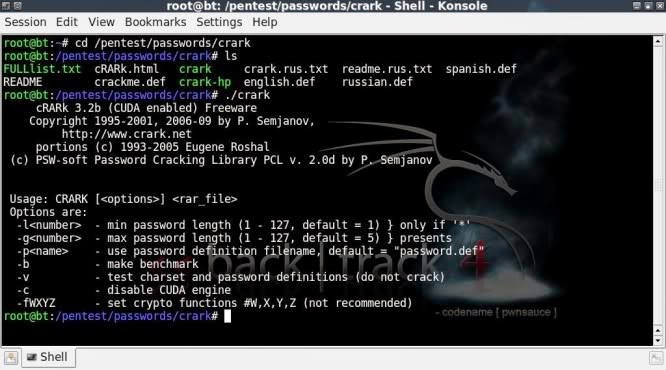
RAR password retrieving with cRARk

cRARk is a .rar archive password retriever, but unlike rarcrack, can be customised to a far greater extent to allow partial passwords, wo...